
Fabric Study · August 2026 · 5 min read
Bonded, Not Stitched: The Science of a Seamless Edge
No thread, no ridge, nothing to trace under silk. Here's what's actually happening when an edge is bonded instead of stitched — and why it holds up over time.
Short Answer
- Ultrasonic bonding uses high-frequency vibration and pressure to generate localised heat that fuses two fabric edges together, with no thread and no needle involved.
- A stitched seam adds thread and doubled fabric, creating a ridge; a bonded seam fuses the existing fabric flat, so there is no added bulk to print through fine fabric.
- Bonding requires a fabric with sufficient synthetic fibre content, since the fibres need a compatible melting point — 100% cotton does not bond well on its own.
- A properly bonded edge is strong enough for close-to-body garments, though it is not intended to carry the structural load a heavy stitched outerwear seam would.
- Heat is what both creates and destroys a bonded edge, so tumble drying is the fastest way to shorten its life.
- With cool hand washing, no fabric softener and flat drying, a bonded edge typically lasts twelve to eighteen months of regular wear.
What a Stitched Seam Actually Does
A conventional seam joins two fabric edges with thread, usually folding and doubling the fabric where it passes through the needle. That construction is strong and familiar, but it necessarily adds bulk — a ridge that's easy to feel by hand and, on fine or fitted fabric, easy to see from the outside too.
Fusing Instead of Sewing
Ultrasonic bonding takes a different approach entirely. High-frequency vibration generates precise, localised heat exactly where two fabric edges overlap, softening the synthetic fibres in each layer just enough for them to fuse into one continuous surface under pressure. There's no thread added and no fabric doubled over — the edge is thinner after bonding than a stitched seam ever could be.
Why This Matters Under Fitted Clothing
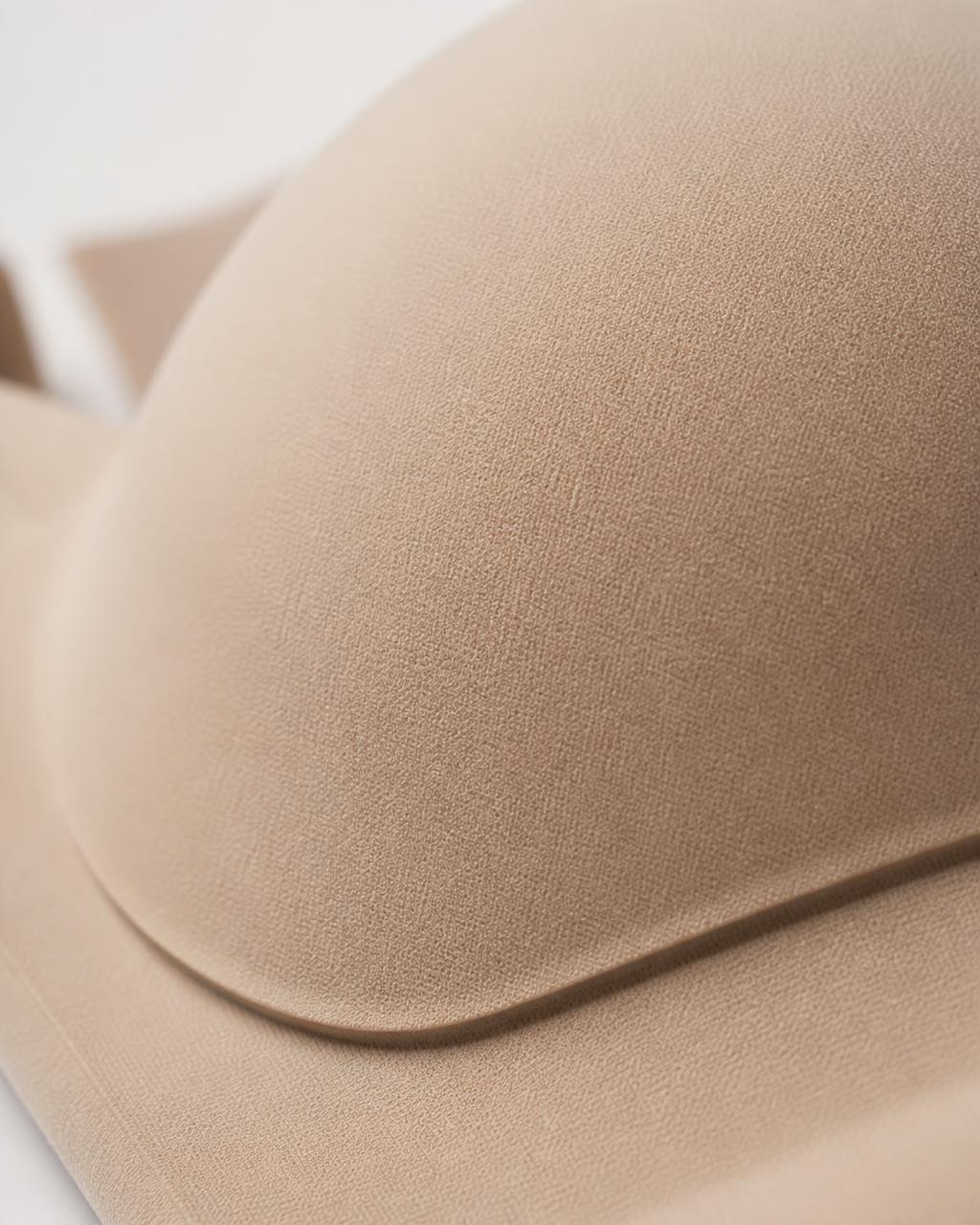
A flat, fused edge has nothing to print through silk, fine knits or a fitted dress the way a stitched seam's ridge does. It's the specific engineering behind Lumen Bonded Seamless Bra — a wide bonded strap and a clasp-free bonded back band, built to disappear completely under clothing that would show a normal seam within seconds.
Is It as Durable as Stitching?
To be honest about the trade-off: bonding depends on getting the fabric blend and heat calibration exactly right, and it's less forgiving of high-heat washing or drying than a stitched seam is. Done properly, on the right fabric, it holds up beautifully for normal wear — but it does ask for a bit more care in how you wash it than a garment built the old way.
Caring for a Bonded Edge
- Hand wash in cool water rather than machine washing whenever possible
- Skip fabric softener — it breaks down the elastane that gives the bonded edge its recovery
- Never tumble dry; lay flat and let it air dry away from direct heat
- Avoid folding or pressing the bonded edge sharply while it's still damp
Questions, answered
What is ultrasonic bonding, exactly?
Ultrasonic bonding uses high-frequency vibration and pressure to generate localised heat at the point where two fabric edges meet, melting the synthetic fibres in each layer just enough to fuse them together. No thread, no needle, no stitching — the fabric itself becomes the seam.
Is a bonded seam as strong as a stitched one?
For its intended use, yes. A properly bonded edge on the right fabric blend holds up to normal wear and washing without separating. It isn't intended to bear the kind of structural load a heavy-duty stitched seam on outerwear would — but for a fine, close-to-body garment, it's more than sufficient and considerably flatter.
Why can you feel a stitched seam but not a bonded one?
A stitched seam physically adds material — thread, plus the folded and doubled fabric it passes through — which creates a raised ridge you can both see and feel under fitted clothing. A bonded seam fuses the existing fabric flat against itself, so there's no added bulk and nothing raised to trace through a thin layer on top.
Does bonding work on any fabric?
It works best on fabrics with a sufficient synthetic fibre content — the fibres need a compatible melting point to fuse properly under heat and pressure. Purely natural fibres like 100% cotton don't bond well on their own, which is part of why bonded garments are typically built from an engineered fabric blend.
How long does a bonded edge last with regular wear?
With proper care — cool hand washing, no fabric softener, no tumble drying — a well-bonded edge typically holds for twelve to eighteen months of regular wear, in line with the rest of a well-made bra's lifespan. Heat exposure is the main thing that shortens it, since it's the same mechanism that created the bond in the first place.